SOMOS Experiences 首席执行官 César González Perdiguero 谈人才留存、AI 与可持续发展
César González Perdiguero: “Retaining talent means creating an environment where people are heard”
入选欧洲百强活动代理商领袖榜(第60位)的西班牙活动代理商 SOMOS Experiences 首席执行官 César González Perdiguero 表示,留住人才的关键是营造让员工被倾听、有成长空间的环境。
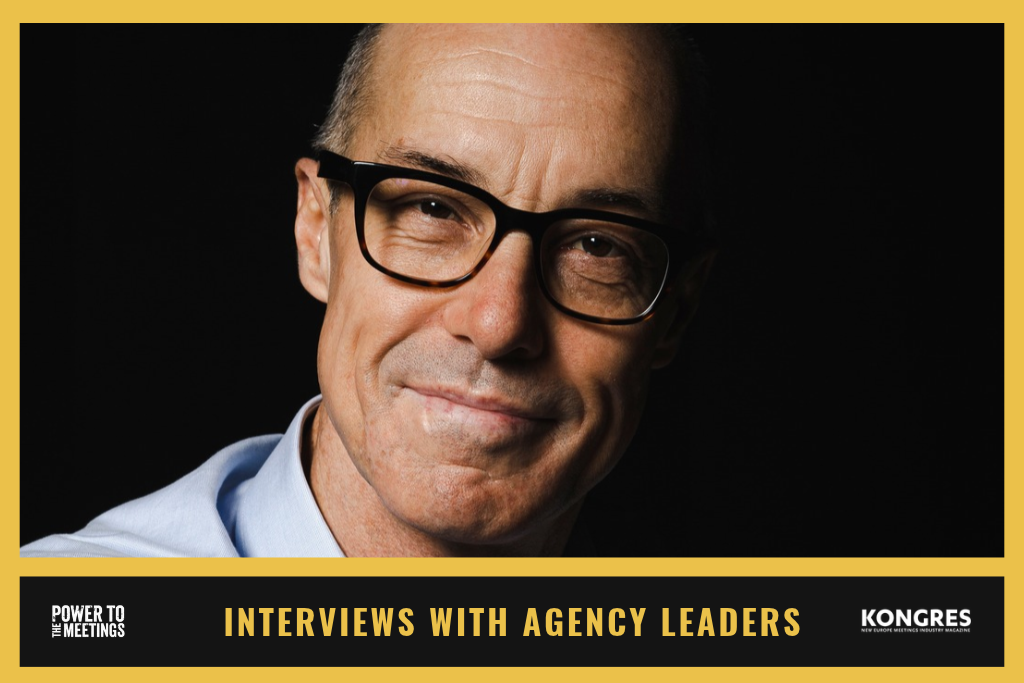
Our nascent list of the top 100 event agency leaders across Europe doubles as an industry compass, showing the future trajectory of events and conferences. The outstanding individuals on the list keep a keen eye on the pulse of the times. César González Perdiguero, CEO of SOMOS Experiences, ranked #60 on the list, discussed how they attract and retain talent at their agency, shared memories of creating the 2024 UEFA Champions League final celebration, and explained why sustainability is more than an empty promise at SOMOS.
Q1: The Top 100 European event agency leaders list has provided a who’s who of the events industry for the first time. How do you see this recognition, and what does it mean for your agency?
At SOMOS, we are working to consolidate our position as a leading company in the national events industry, and we see this recognition as a result of that work, not as an objective in itself. The fact that, for the first time, a list brings together the leading event agency executives in Europe is particularly interesting to me, as it allows us to share different realities, business models, and ways of understanding our industry that, although different, face many of the same challenges. Being part of this group is, of course, a source of pride, but also an opportunity to continue learning from our peers.
Q2: Live events seem to be the buzzword of 2026. With the industry going from strength to strength, how do you see the future of events?
I believe our industry is going through a period of change, with brands increasingly shifting budgets from traditional communication channels towards experiential marketing. But growth is also bringing important challenges: a shortage of specialised talent, pressure on margins, increasingly tight deadlines, and strong competition. I believe this will lead to continued sector growth in the coming years, while we also see consolidation among major players.
Q3: How are economic and political turmoil, rising production costs and ambitious client expectations affecting your agency’s business model?
Uncertainty is making brands cautious when defining their strategic plans, with a greater focus on the short term. On top of this, we are dealing with rising production costs and increasingly high client expectations. For agencies, this combination is directly affecting margins and forcing us to continuously review how we work: becoming more efficient, managing costs more carefully, and, above all, demonstrating the value we bring more clearly. I believe one of the sector’s biggest challenges lies precisely here: growing by leveraging efficiency.

“At SOMOS Experiences, we have moved from using tools to building our own agents, trained in how we work and the expertise we have built up.”
Q4: Artificial intelligence is rapidly reshaping creative and operational processes. To what extent have you integrated it across your processes, and which jobs remain out of its reach?
At SOMOS Experiences, we have moved from using tools to building our own agents, trained in how we work and the expertise we have built up, always within a governance framework that protects our information and our clients’.
Our principle is simple: AI comes in where there is a blank page or repetitive work, but not where judgement is required. The idea, the creative decision, the relationship of trust with the client and the execution of a live event remain the domain of people, and I believe they will continue to be.
Q5: Sustainability has become both a strategic responsibility and a measurable business criterion. How is your agency translating environmental commitments into concrete results and accountability?
Sustainability stops being a real commitment when it clashes with day-to-day production, and that is when you can really see whether an agency takes it seriously. At SOMOS, this means, for example, that we don’t discard a stage or structural element after an event: we store and reuse it in future productions whenever possible, and donate anything that can no longer be reused but still has value to social organisations, extending its life.
Certified management systems — ISO 14001, ISO 20121, and B Corp certification — help us measure energy consumption, emissions, and the waste we generate, and separate it by material type across all our productions.

“That exchange between generations is particularly valuable: younger talent brings new perspectives, an awareness of trends and new ways of communicating, while more experienced professionals bring knowledge and experience.”
Q6: How does your event agency attract and retain young talent?
We believe one of the best ways to attract young talent is to give people the opportunity to learn by doing. Those who join us can get involved in real projects, contribute their ideas and take on responsibility in an environment where every client, event and challenge is different.
And something particularly important to us is the opportunity to learn alongside some of the industry’s most experienced professionals. We have highly experienced people who share their knowledge and become role models for those starting. That exchange between generations is particularly valuable: younger talent brings new perspectives, an awareness of trends and new ways of communicating, while more experienced professionals bring knowledge and experience.
But attracting talent is only the first step. Retaining it means creating an environment where people feel heard, have room to grow and can see a professional future within the company. We want people who start their careers at SOMOS to find not only a first opportunity, but also a place where they can learn, evolve and build their own path in the industry.
Q7: If you could enter a time machine, what would you advise yourself when you first started in the events industry?
Design a medium-term strategic plan and make sure you have the right team to make it happen.
Q8: If you had to single out one event from your portfolio, which would it be and why?
I would probably choose the broadcast and celebration of the 2024 UEFA Champions League final with Real Madrid. It was one of those projects where you know from the beginning that you are dealing with something special: because of its scale, its impact and, above all, because there was no room for error.
We were responsible for production at the stadium and, in the event of a victory, for preparing the celebrations at both Cibeles and the Santiago Bernabéu Stadium, together with the fans. For the match broadcast, we built a central cube with four screens, lighting and FX.
And when victory came, we had less than 24 hours to turn Cibeles and the stadium into the setting for the celebrations: a stage and runway at Cibeles; and at the stadium, a 360-degree screen structure, LED screens on the pitch, an audiovisual show and a runway of light arches for the players’ exit.
And this was probably the most special part of the project: Taylor Swift’s concert had taken place in Madrid the day before, so the time available to dismantle, build and produce everything was particularly tight. Even so, we had everything ready so the team and more than 75,000 fans could celebrate the victory as it deserved.
“I think we should have a conversation as an industry about how we compete with one another, and how we can move toward better practices through industry associations.”
Q9: Which industry buzzword would you permanently ban, and what uncomfortable truth should event agencies start discussing instead?
I would ban the expression “give it another twist”. We use it so often that, in many cases, it has lost its meaning. And I think we should have a conversation as an industry about how we compete with one another, and how we can move toward better practices through industry associations. If we want our industry to keep becoming more professional, we also need to talk openly about these issues.
Q10: Does Europe genuinely operate as one event market, or do outdated divisions between established Western markets and “New Europe” still influence budgets, visibility and access to opportunities?
I believe we are still a long way from operating as a single market. Different cultures, backgrounds, economies, and interests continue to influence our industry significantly.
Learn more about SOMOS Experiences here.
Views: 0
来源:Kongres Magazine · kongres-magazine.eu